
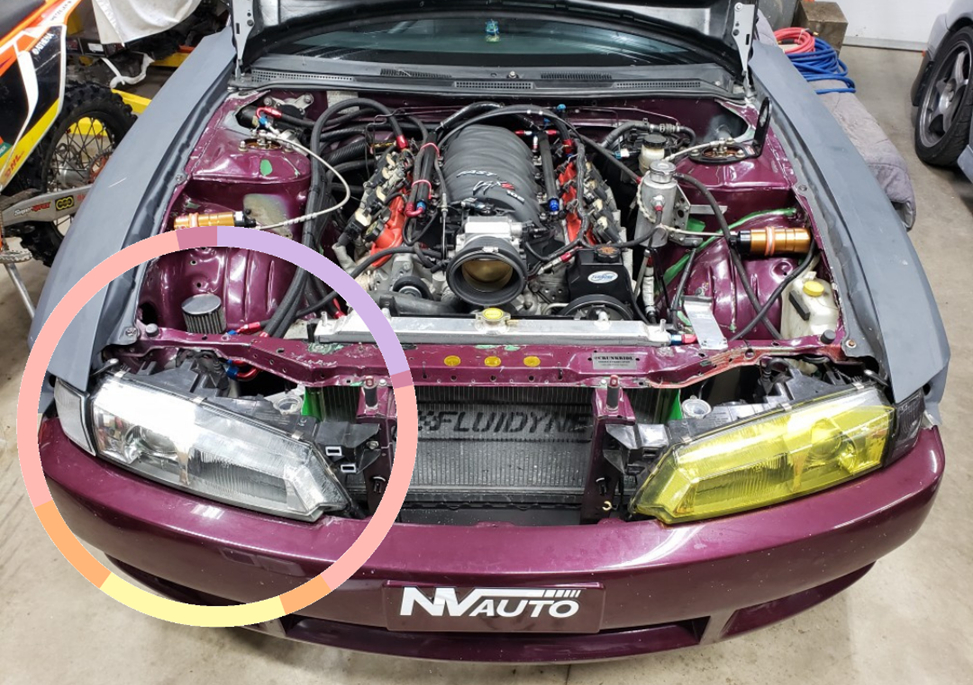
Project Overview
Modern automotive design often requires extremely precise digital capture of complex components such as headlights and corner lights. In this project, V3D Technologies performed high-resolution laser 3D scanning of a car headlight assembly to support custom automotive design and reverse engineering workflows.
The goal was to accurately capture the intricate geometry of both the headlight and corner light components and convert them into a usable digital format for CAD modeling, design validation, and manufacturing applications.
Challenge: Capturing Complex Automotive Optical Geometry
Car headlights and corner lights are among the most challenging automotive components to measure due to:
- Highly complex freeform surfaces
- Transparent and reflective materials
- Tight packaging constraints within vehicle assemblies
- Multiple internal and external geometric features
- Need for sub-millimeter accuracy for proper fitment
Traditional measurement methods such as calipers or CMM probing are insufficient for capturing full surface geometry, especially for organic and curved optical designs.
The client required a complete and highly accurate digital representation suitable for CAD reconstruction and custom automotive design.
Solution: Metrology-Grade 3D Laser Scanning
V3D Technologies used a high-accuracy metrology-grade laser 3D scanner to capture the full geometry of the headlight and corner light assembly.
Key steps included:
- Preparation and positioning of the headlight assembly
- Application of scanning targets for alignment accuracy
- Apply sublimating 3D scanning spray on transparent surfaces
- High-resolution laser scanning from multiple angles
- Real-time data capture for complete surface coverage
The scanner captured both macro geometry and fine surface details required for reverse engineering and CAD reconstruction.
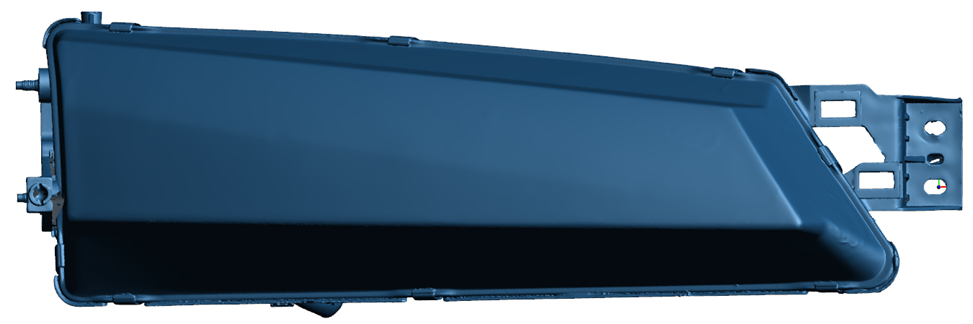
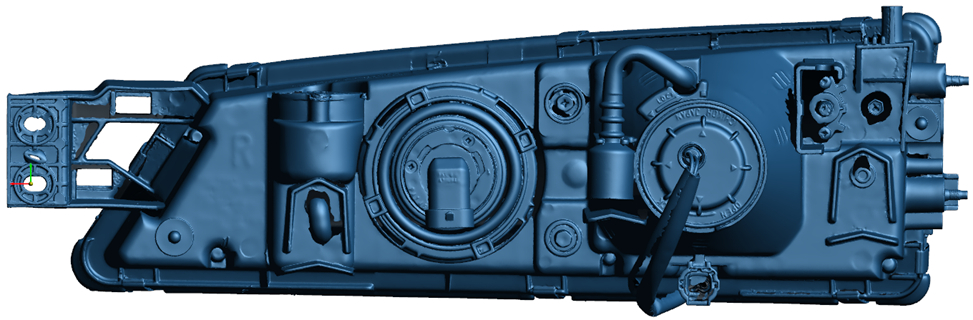
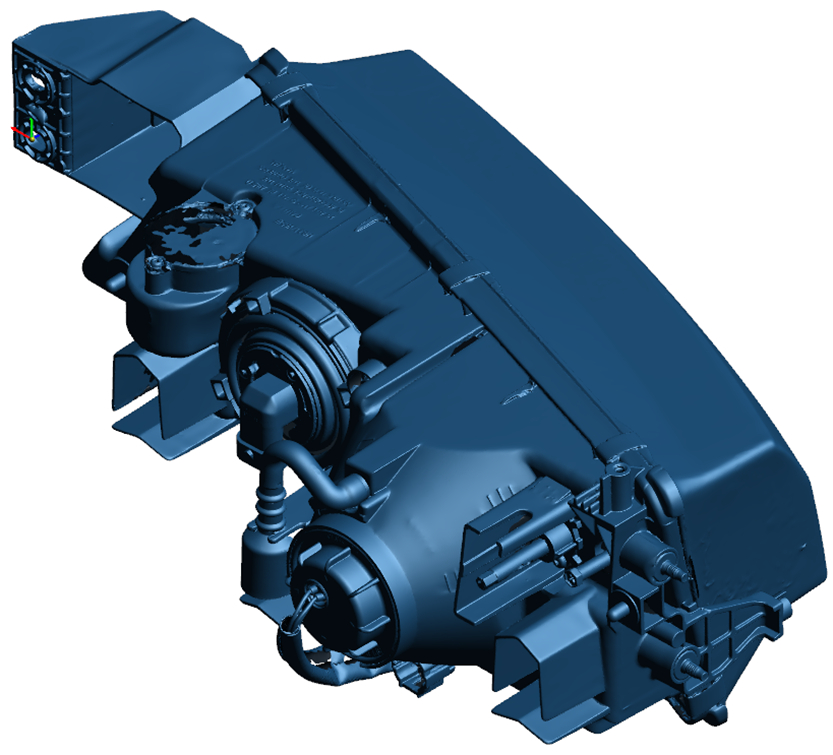
Polygon Model (scanned mesh) of Head Light
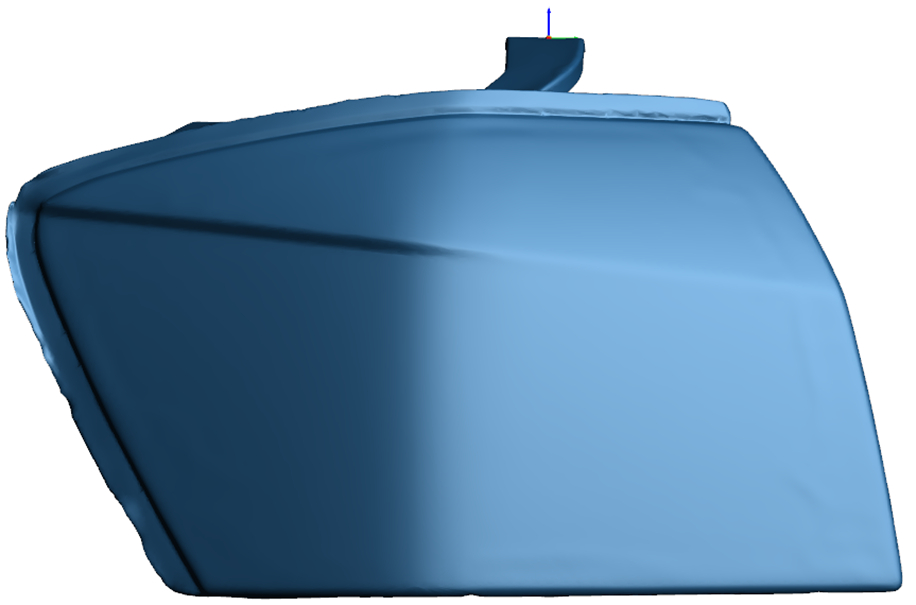
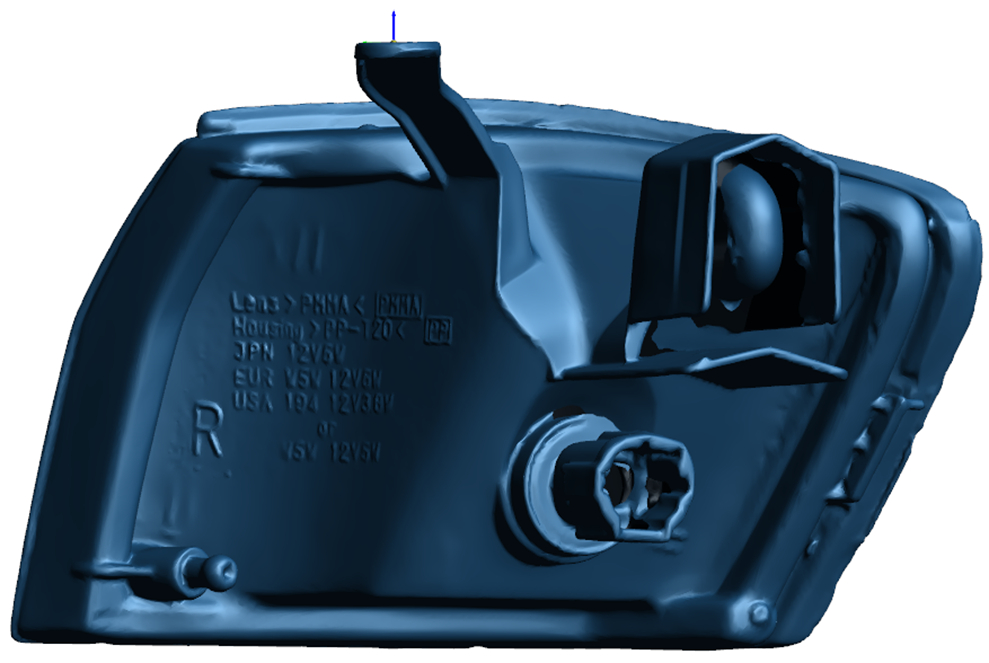
Polygon Model (scanned mesh) of Corner Light
Results & Engineering Benefits
The 3D scanning process successfully delivered a highly accurate digital replica of the automotive lighting components.
Key outcomes:
- Sub-millimeter accuracy achieved in geometry capture
- Complete digital representation of headlight and corner light assemblies
- Reduced dependency on manual measurement methods
- Faster design iteration cycles for the client
- Improved fitment accuracy in custom automotive design
- Reliable dataset for manufacturing and prototyping
This enabled the client to move forward with confidence in both design modification and manufacturing preparation.
Advantages of Laser 3D Scanning in Automotive Design
Using laser-based 3D scanning provides several advantages over traditional measurement techniques:
- Captures full-field geometry in a single dataset
- Works for complex organic and curved surfaces
- Reduces human error in measurement
- Accelerates product development timelines
- Enables digital workflows for engineering teams
- Improves accuracy in downstream manufacturing processes